Across Asia, intersex people—those born with sex characteristics that do not fit typical definitions of male or female—continue to face discrimination and violence in every sphere of life. From hospitals and homes to workplaces and online spaces, their bodies and voices are too often controlled, silenced, or erased.
How to protect intersex people from discrimination? The first step should be to fully map out all possible forms of discrimination, to find the root and to understand it, then intervention can be planned!
From Hospital to Society
Intersex people face many layers of discrimination, from different aspects of life, across a magnitude of time.
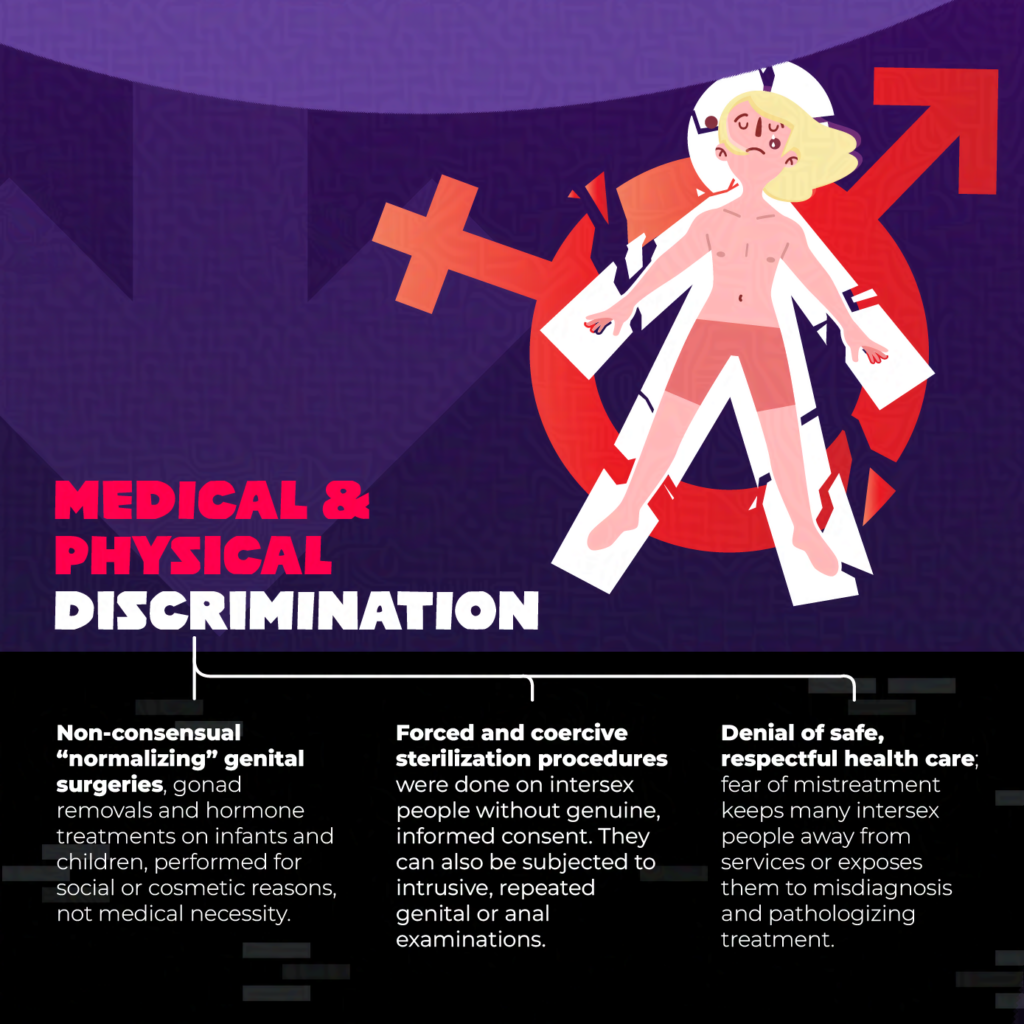
It starts at the very moment they are born, in the hospital. Across the region, many intersex children are still subjected to medically unnecessary “sex‑normalizing” surgeries and hormonal treatments, performed without their informed consent in an attempt to make their bodies conform to strictly binary ideals. UN human rights experts have warned that these irreversible procedures can cause lifelong pain, scarring, loss of sexual sensation, incontinence, trauma, and even sterilization. Yet in most Asian countries, there are still no explicit laws protecting intersex children from these practices.
It doesn’t end there; family pressure and social stigma often reinforce this medical violence. Research by Intersex Asia and its partners in India, Bangladesh, Nepal, and Pakistan documents how intersex children are hidden, rushed into surgery, or denied education because their bodies are treated as a family “secret” or “shame”. These decisions, usually made without the child’s participation, shape a lifetime of restricted choices in schooling, work, and relationships.
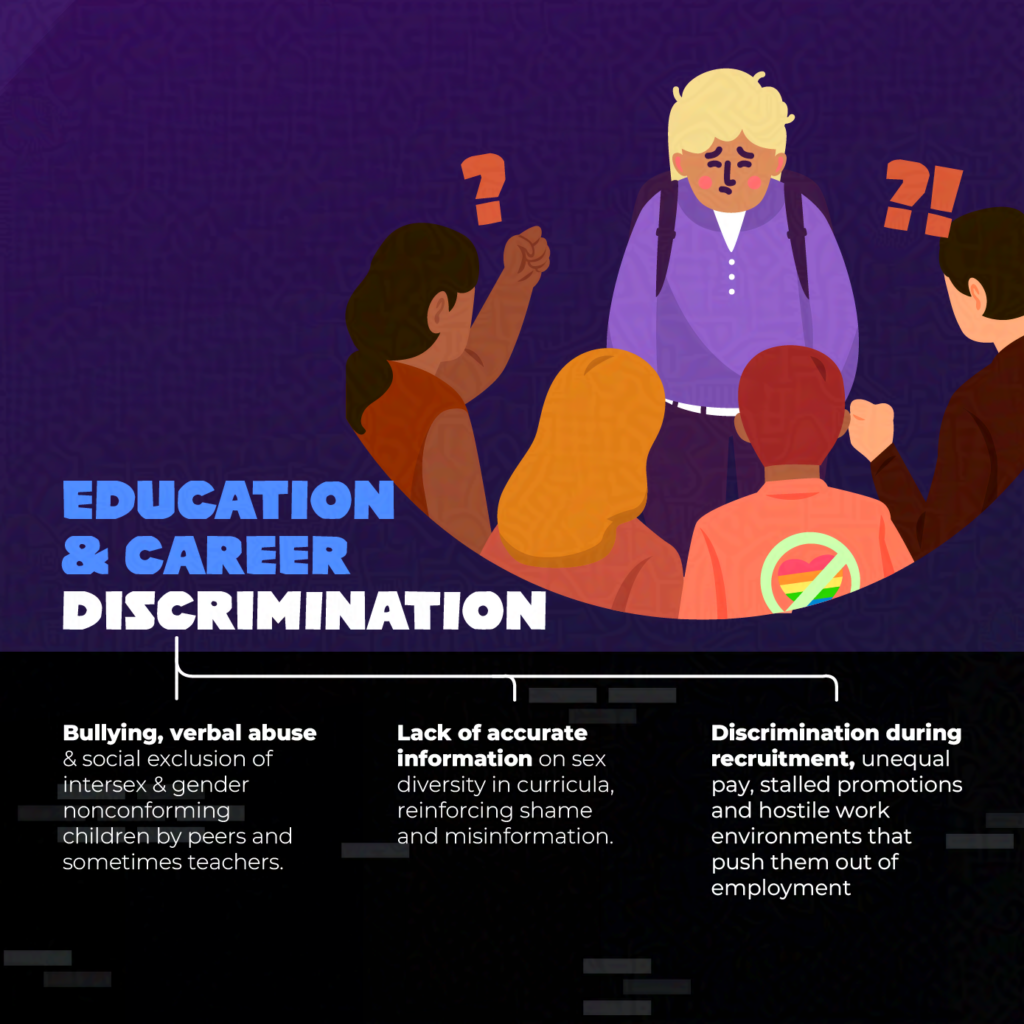
When intersex people grow up and seek work, many encounter economic exclusion. A UNDP and ILO survey of LGBTI people in China, the Philippines, and Thailand found that 21% of respondents in China, 30% in the Philippines, and 23% in Thailand had been harassed, bullied, or discriminated against at work because of their sexual orientation, gender identity, expression, or sex characteristics.
In the digital age, discrimination has moved online as well. Amnesty International has documented digital violence such as online abuse and cyberbullying in Thailand, where LGBTI human‑rights defenders advocating for legal recognition and equality have received threats, hate messages, and gendered disinformation on social media platforms.
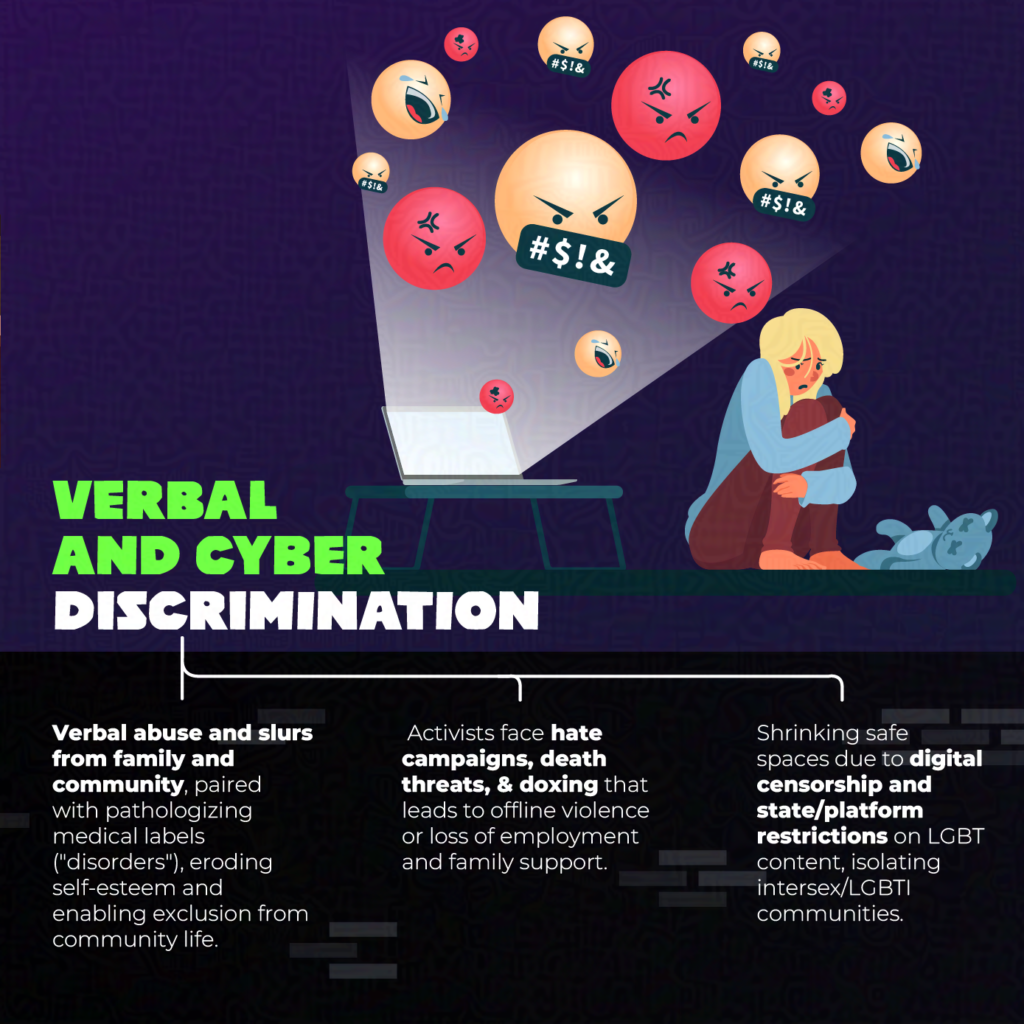
The layers of discrimination toward intersex people cover almost the entirety of their lives, leaving not just a short burst of pain, but a lifelong scar.
What should Zero Discrimination mean?
Every year, the world celebrates its Zero Discrimination Day on 1st March. While it’s a good reminder of how discrimination still exists out there, people still haven’t fully comprehended the discrimination intersex people are facing. It’s not just about the attitude, but also the right to live, to have control over one’s body, even at a young age.
Luckily, the world is beginning to listen. In 2024, the UN Human Rights Council adopted its first‑ever resolution explicitly affirming the rights of intersex people and urging states to protect them from violence and harmful medical practices. But resolution alone is not enough, laws, policies and daily practices must follow, especially in regions where intersex people are still invisible or criminalized by association.
On this Zero Discrimination Day, we must insist that “zero discrimination” includes intersex people in Asia. That means:
- Ending non‑consensual surgeries;
- Passing intersex‑inclusive anti‑discrimination laws;
- Protecting intersex children and parents in families,
- Protect intersex people in schools and the workplace
- Be aware of verbal abuse and cyberbullying toward intersex people and families.
A world without discrimination is only possible when intersex people can live openly, safely and proudly in their own bodies.