
Key Takeaways:
- Advocacy at the UN: Nada Chaiyajit (representing Intersex Thailand and Intersex Asia) highlighted major systemic violations against the intersex community at CSW 70.
- Bodily Autonomy: Non-consensual surgeries on intersex infants remain a critical human rights violation across the region.
- Legal Blindspots: A lack of protection for “sex characteristics” in anti-discrimination frameworks blocks access to justice, citizenship, and basic services for intersex in Asia.
- Emerging Threats: Regressive, strictly policy proposals threaten to exclude intersex women and nonbinary individuals from established human rights protections.
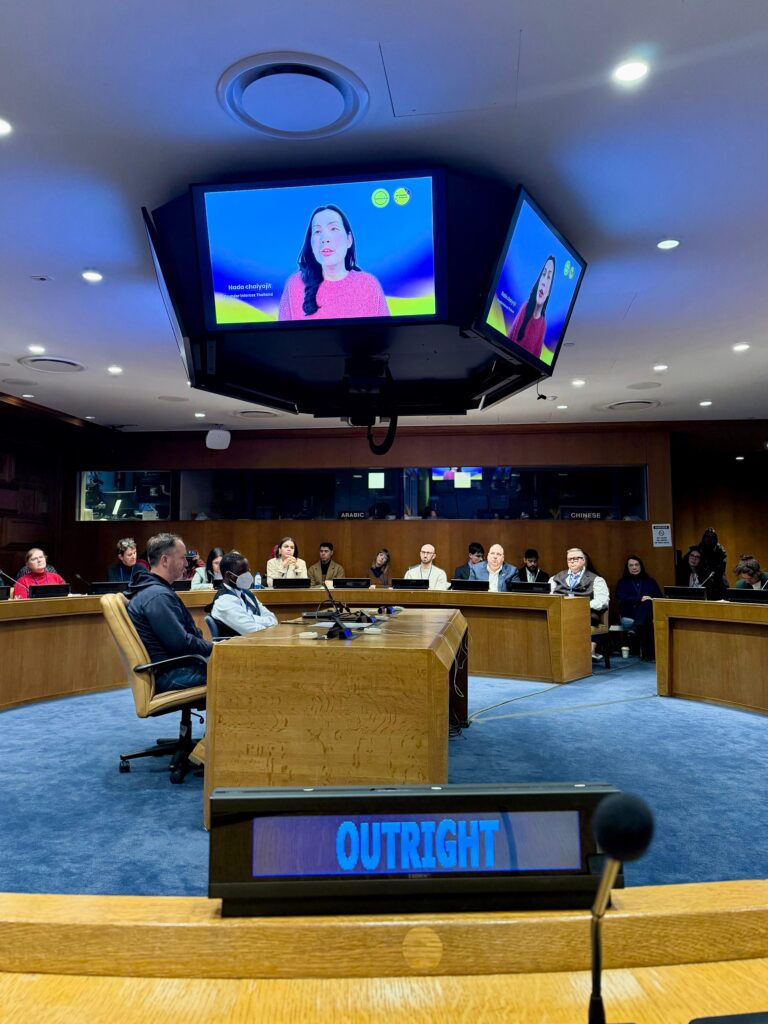
Intersex Asia recently participated in the first dedicated side event on intersex rights at the 70th session of the Commission on the Status of Women (CSW) on 18th March 2026. Organized in collaboration with Outright International, led by Senior Advisor Kimberly Zieselman, the session provided a formal platform to evaluate the integration of intersex issues into global human rights and gender equality frameworks. The event served to strategically elevate the 2024 Human Rights Council (HRC) resolution on intersex rights and the subsequent 2025 OHCHR report.
Representing Intersex Thailand and Intersex Asia, advocate Nada Chaiyajit delivered a powerful statement outlining the structural challenges affecting intersex individuals. Drawing on recent submissions to CEDAW and regional research data, Chaiyajit highlighted a severe, ongoing violation of intersex human rights in Asia: the practice of non-consensual, medically unnecessary surgical interventions on intersex infants. These procedures, aimed at conforming atypical sex characteristics to binary biological norms, constitute recognized violations of the right to bodily integrity and health.
Furthermore, Chaiyajit noted that the failure of most anti-discrimination frameworks in Asian jurisdictions to explicitly recognize “sex characteristics” as a protected category significantly impedes access to justice. This legal invisibility deeply impacts the intersex community, extending to core civil registration processes. In many cases, intersex in Asia are frequently denied citizenship and vital identification documents unless they undergo pathologizing medical evaluations.
The cumulative effect of these legal and institutional gaps within governmental bodies, multilateral institutions, and National Human Rights Institutions (NHRIs) severely restricts access to essential services, including healthcare, education, and public welfare.
Analyzing Policy Threats within UN Frameworks
A significant portion of the discussion at CSW 70 focused on mitigating regressive policy shifts within international arenas. Recent proposals seeking to redefine violence against women through a strictly biological, “sex-based” paradigm present a substantial risk to the intersex community. Implementing a restrictive binary definition of sex characteristics threatens to systematically exclude intersex women and intersex nonbinary persons from established human rights protections. Safeguarding intersex human rights in Asia and globally requires actively resisting these exclusionary frameworks to ensure comprehensive protection for all people with diverse sex characteristics.
Intersex Asia strongly advises stakeholders to critically evaluate the implications of proposals for a new Optional Protocol to CEDAW. Such measures carry the potential to fragment existing rights. Our organizational stance advocates for the comprehensive enforcement of the current CEDAW framework. As established in CEDAW’s General Recommendation 35, gender-based violence is recognized as a form of discrimination that must be systematically eliminated for all individuals, precluding the exclusion of persons based on variations in sex characteristics.
Recommendations for Member States
The conclusion of the side event centered on actionable policy recommendations. To move beyond the rhetoric of the HRC resolution, we urge Member States to adopt the OHCHR recommendations through the following concrete steps:
- Statutory Legal Reforms: Enact comprehensive legislation that explicitly prohibits non-consensual medical interventions on intersex minors and incorporates “sex characteristics” as a protected category in all anti-discrimination laws.
- National Action Plans: Develop and fund targeted initiatives to address the specific healthcare, educational, and social welfare needs of intersex populations.
- Independent Monitoring Mechanisms: Establish oversight bodies to ensure state accountability and track the implementation of intersex-inclusive policies.
Watch the full event record here