
As we approach the 70th Session of the Commission on the Status of Women (CSW 70), the Asia-Pacific region has sent a clear message from its preparatory meeting in Bangkok: access to justice is a fundamental right, but for many women, girls, and intersex individuals, it remains “distant or conditional”.
Intersex Asia’s participation in the Preparatory Meeting on January 29–30, 2026, was once again an effort to ensure that the intersex community, particularly intersex in Asia is not just an afterthought in these global dialogues, but a key voice in shaping the CSW agenda.
What is the CSW?
The Commission on the Status of Women (CSW) is the United Nations’ largest annual gathering focused on gender equality. It’s a two-week summit where governments, NGOs, and activists around the world meet to negotiate global standards and set the agenda for the coming year. The theme of CSW70 is access to justice for women and girls, alongside women’s safety and participation in public life, which highlights the elimination of discriminatory laws, making legal systems more equitable and inclusive, and addressing the structural and social hurdles that prevent women from seeking or receiving justice.
Given the context, it’s critical for Intersex Asia, and our allies, to have a presence in such events, ensuring the voice of intersex are there and to be considered in later stages.
Asian Intersex Voices on the Plenary Floor
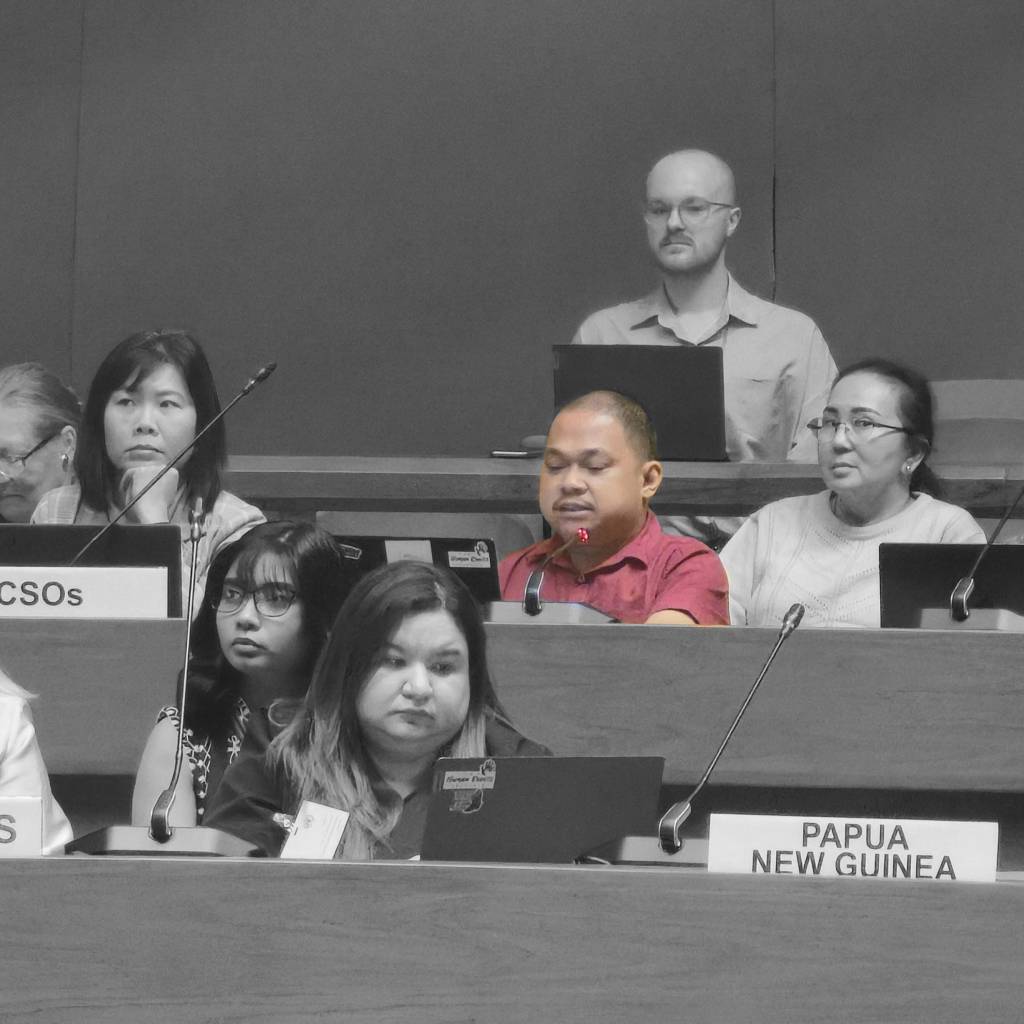
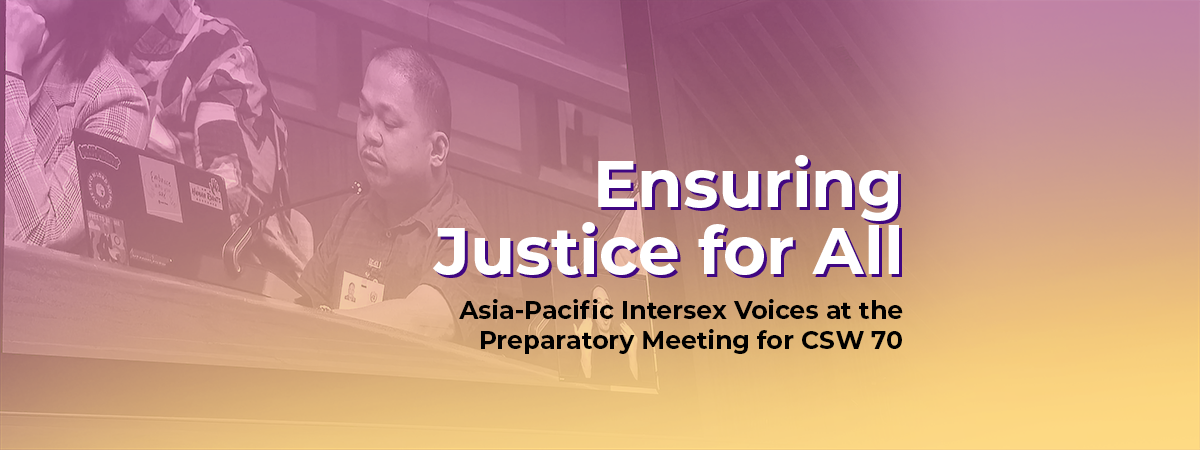
One of the most significant achievements of our participation was securing speaking slots for Jeff Cagandahan- IA’s Board Member and Executive Director of Intersex Philippines. Jeff was selected to speak on behalf of the Asia-Pacific CSOs during their meeting for this first ever CSW preparatory meeting in the region. In Session 1, Jeff addressed the broad challenges of “Understanding Women’s and Girls’ Access to Justice”. In Session 2, he focused specifically on the connection between intersex rights and CEDAW.
The speech was to remind member states that the specific legal and medical pathologization of intersex bodies was recognized as a barrier to justice. To achieve justice and control over their own bodies, getting rid of discriminatory laws is critical, especially those that allow doctors to perform non-consensual medical procedures. These procedures violate basic human rights.
Dismantling Barriers and Building Alliances
The theme of the meeting, “Dismantling Discriminatory Laws, Policies, and Practices”, was closely related to the intersex movement. Many laws that appear “gender-neutral” often produce discriminatory effects for those who do not fit the binary. For instance, laws related to marriage, inheritance, and adoption in most Asian countries are often framed using gender-specific language (e.g., “husband and wife,” “son and daughter”). Even where these laws appear “gender-neutral” by simply referring to persons, their historical and structural binary application creates legal ambiguities.
During the discussions, we highlighted how the lack of legal recognition and inclusive gender markers creates a “broken justice chain” for intersex people. With such a situation, the need to dismantle barriers is vital, which can only be achieved through mutual partnership with other allies and, through that, execute a collective effort. That’s another goal for us in this event, where we actively reach out and from connection with regional feminist organisations like APWLD, ARROW, and APA SRHR. More initiatives from our collaboration will soon be revealed.
The Statement for the Road Ahead
Toward the end of the meeting, we were able to highlight intersex issues in the CSO statement submitted for CSW 70. It serves as a collective voice for civil society in the Asia-Pacific to be carried forward to the global stage in New York, including the suggested actions for intersex-related matters, such as:
- Strengthening gender-equal and non-discriminatory legal frameworks.
- Promoting intersectionality as a core principle in justice policies.
- Ensuring universal access to legal aid for those facing multiple forms of discrimination.
As we look toward the global CSW 70 session in March 2026, we will prioritize monitoring the Agreed Conclusions to ensure that the Statement can reflect the will of the intersex community, and regional recommendations for intersex inclusion are not diluted
Looking ahead, we are collaborating closely with New York-based organizations, such as Outright International, to organize the first-ever intersex-led side event during a CSW session and other engagement initiatives. All are to translate these high-level discussions into concrete legal protections and remedies for intersex individuals across Asia and the Pacific.