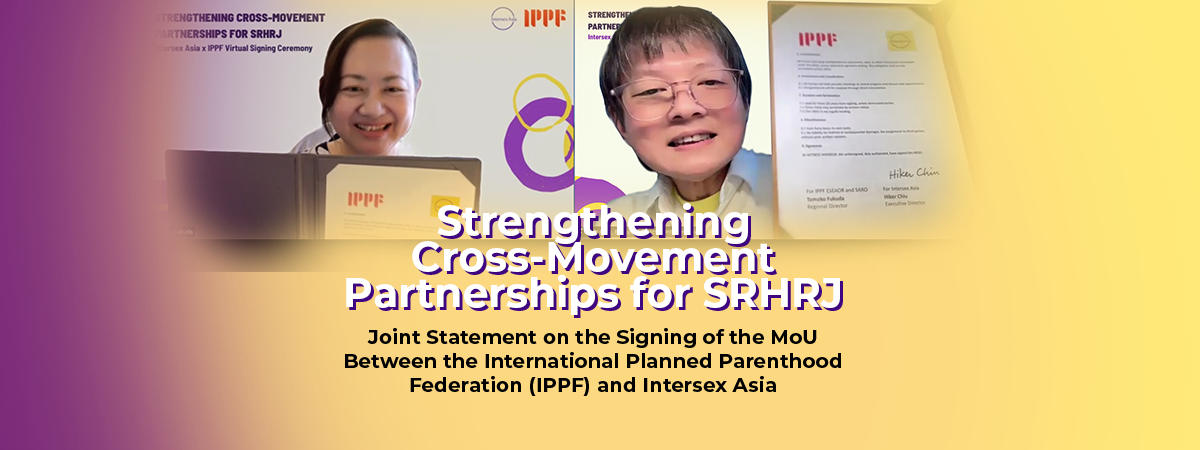

Joint Statement on the Signing of the Memorandum of Understanding (MoU) Between the International Planned Parenthood Federation (IPPF) and Intersex Asia Network
Today, the International Planned Parenthood Federation (IPPF) East and Southeast Asia and Oceania Region (ESEAOR), the South Asia Regional Office (SARO), and Intersex Asia formalize a three-year partnership grounded in our shared values of dignity, autonomy, and justice. The Memorandum of Understanding (MoU) affirms our shared commitment to advance sexual and reproductive health, rights and justice (SRHRJ) for intersex people across Asia and the Pacific.
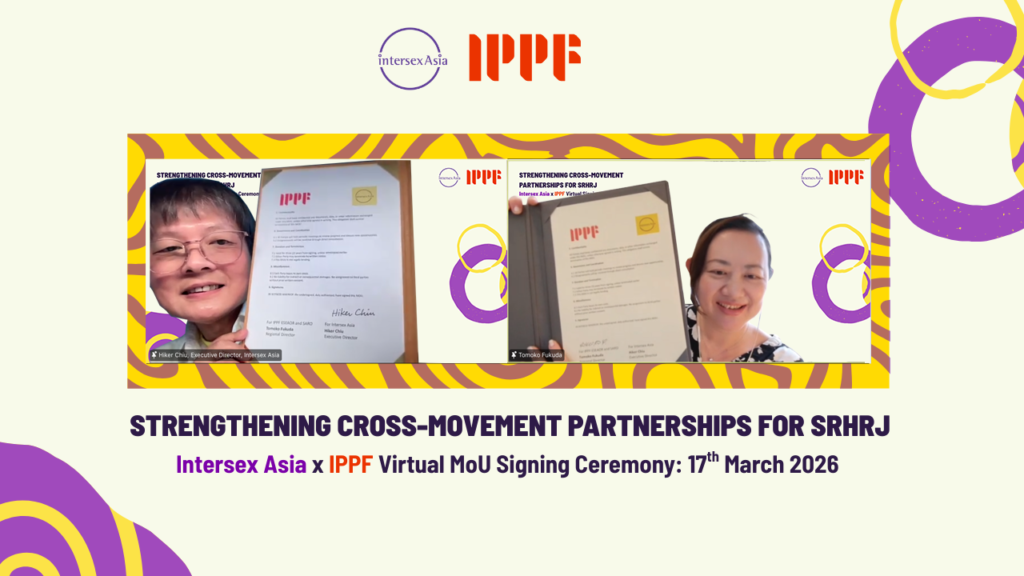
Strategic partnerships between service providers and community-led networks such as IPPF and Intersex Asia are vital to challenge harmful norms, transform institutions, and ensure those most affected lead the way. In an era of increasing opposition to gender equality and bodily autonomy, we choose to move forward together.
Across the region, intersex people — those born with physical sex characteristics that do not conform to typical binary definitions — face stigma, discrimination, and silence. It is estimated that about 1.7% of the global population is born with intersex traits. Many have undergone irreversible medical procedures, such as surgeries and hormonal treatments during childhood, without full, free, informed consent. These practices, known as intersex genital mutilation (IGM), infringe upon their rights to bodily integrity and autonomy.
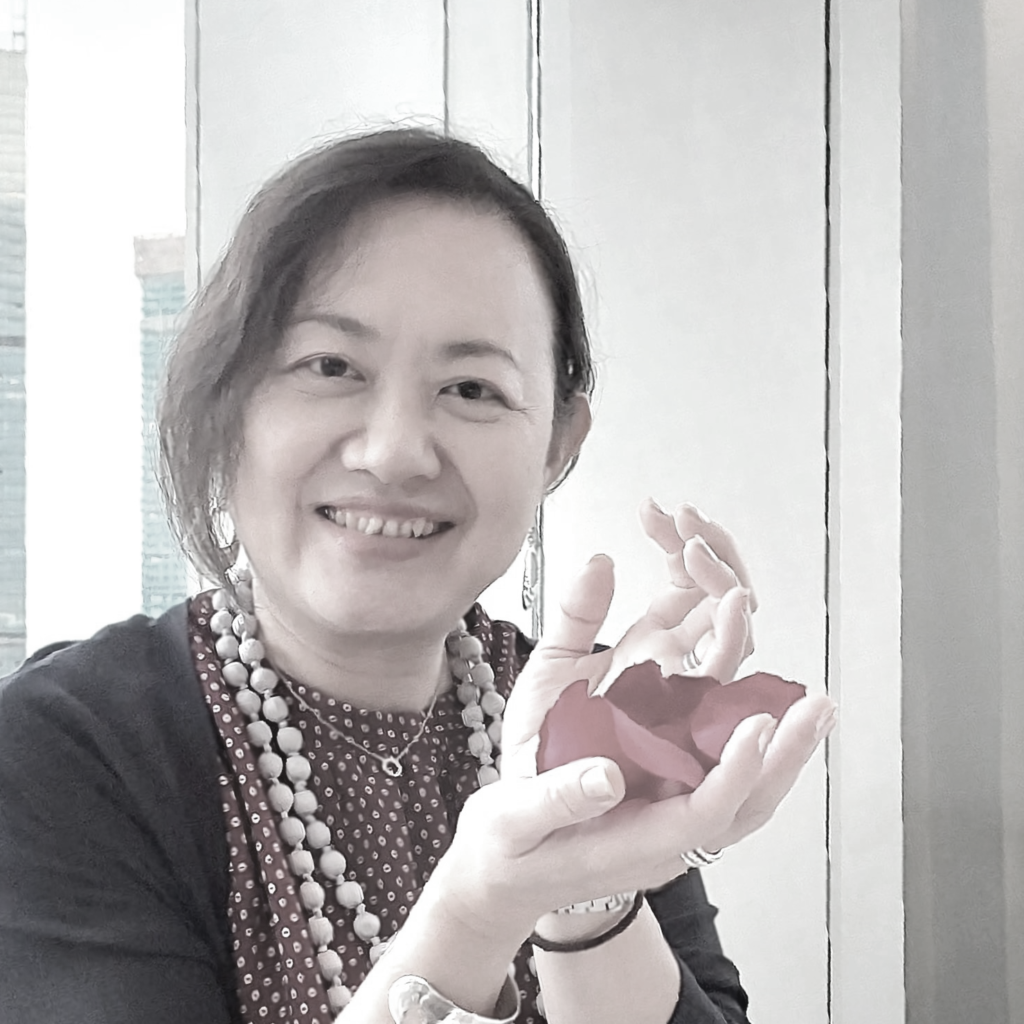
“SRHR has always been, and will always be, about access, rights and justice; about whose bodies are protected and whose bodies are controlled. No child should be subjected to medically unnecessary procedures to conform to social expectations. No parent should be pressured by fear or misinformation. No healthcare system should prioritise normalisation over human rights. This partnership with Intersex Asia reflects IPPF’s commitment to stand firmly on the side of bodily autonomy, to do no harm, and to ensure that intersex children and communities are treated not as problems to be fixed, but as rights-holders whose dignity is non-negotiable,” added Tomoko Fukuda, Regional Director, IPPF ESEAOR and SARO (interim).
In a global climate where gender equality faces growing backlash, defending intersex rights is part of defending human dignity. When children are subjected to irreversible procedures without consent, bodily autonomy itself is at risk.
We refuse that erosion.
Over the next three years, IPPF and Intersex Asia will work together to advance the rights, dignity, and well-being of intersex people across our communities. We will advocate to end intersex genital mutilation and push for stronger legal and policy protections, and amplify intersex voices through ethical, trauma-informed storytelling. We will support community-led research, create safer spaces for intersex youth, and strengthen the capacity of IPPF Member Associations and intersex organisations to provide respectful, inclusive, person-centred care. This will ensure that sexual and reproductive health care—including psychosocial support, contraception, gender-affirming care, referrals, and community outreach—are safe, informed, and responsive. This partnership will be guided by collective care and shared accountability, ensuring that intersex people are meaningfully involved and that their leadership, knowledge, and lived realities remain at the core.
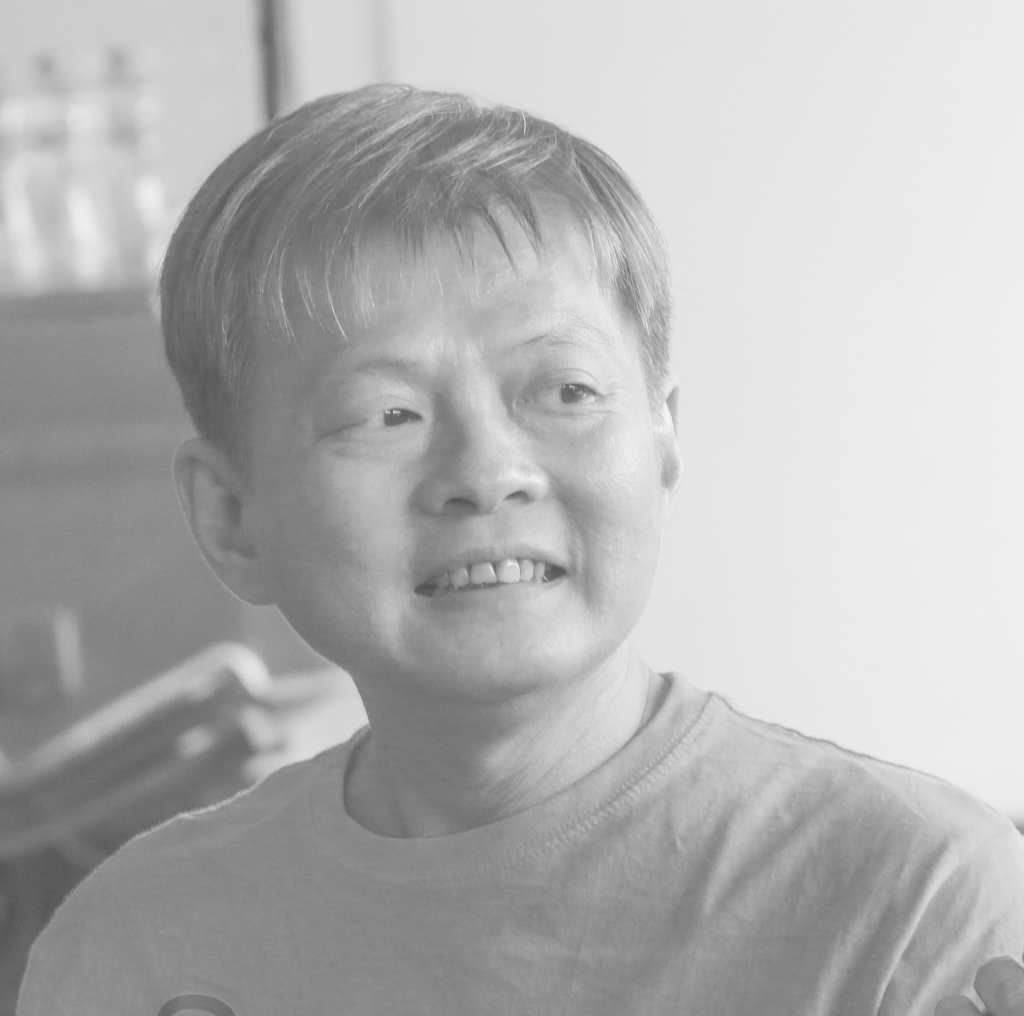
As Hiker Chiu, Executive Director of Intersex Asia, affirms, “Intersex individuals are an integral part of human diversity, yet they have been excluded, silenced, and even erased throughout history. Human diversity is a shared treasure, not something to be feared or vilified. By embracing our differences, we open our eyes and minds to appreciate the unique qualities of every individual. Like everyone else, intersex people are here to love and be loved for who they truly are, not to be harmed or forced to conform to others’ expectations. We believe that collaborating with IPPF to promote intersex-inclusive rights within the SRHRJ movement will not only raise awareness and support for intersex issues but also foster self-acceptance and appreciation of the world’s rich diversity.”
Lasting change happens through solidarity across movements. This MoU marks a commitment to move from silence to solidarity, to protect children, affirm autonomy, and transform both institutions and narratives.
Bodily autonomy is a fundamental right.
Dignity is inherent.
Intersex rights are human rights.
For media enquiries, please contact Natassha Kaur at natassha@ippf.org or Andrey Tran at communication@intersexasia.org