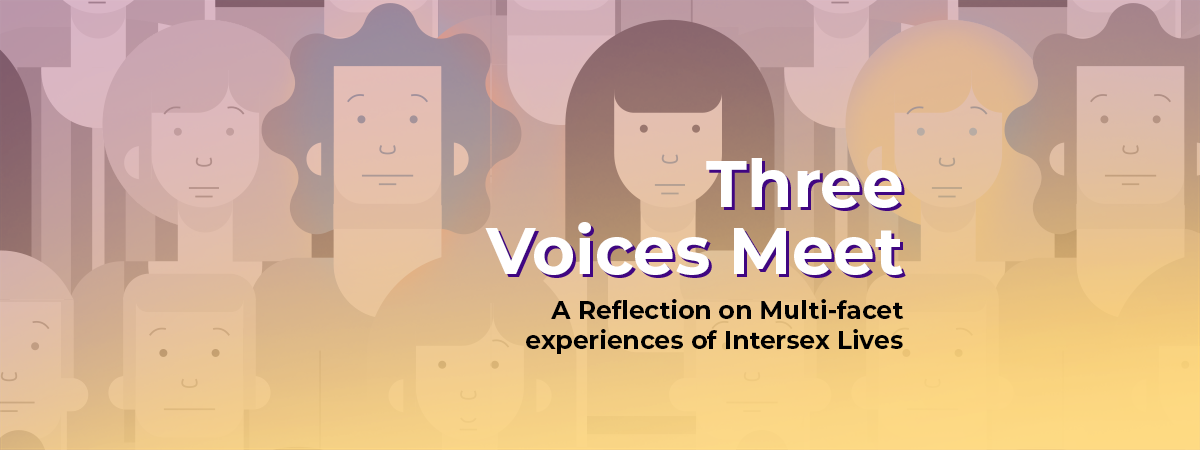

In a rare convergence of perspectives, doctors, parents, and intersex individuals came together, not to argue, but to illuminate. This was Enfold’s 9th Global Coalition quarterly meeting, which happened on the 5th of February, focusing entirely on intersex matters.
As I facilitated the meeting, I found myself witnessing something I don’t see often enough in the intersex movement: a genuine three-way conversation where medical professionals, parents, and intersex people sat at the same table. They came together not as parties locked in debate, not as collectors of trauma narratives, but as co-contributors, each with their own puzzle piece, weaving together a fuller picture of what it means to navigate intersex lives in a world obsessed with binary norms.
The Medical Truth: It’s NOT an emergency!
Dr. Kanishka Das laid out a truth that many are still confused – the majority of children with differences in sex development are not in an emergency condition!.
Historically, the birth of an intersex child was treated as a crisis, a “medical and social emergency” that demanded immediate intervention. But the truth is, only a rare few cases require urgent medical action, life-threatening conditions like certain forms of adrenal hyperplasia or urinary obstructions that genuinely endanger health.
Everything Else Can Wait! And it’s SAFE to wait!
Modern medical direction is clear: observe, delay physical intervention, and postpone surgeries unless clinically necessary. This isn’t unique to intersex care—it’s standard protocol across many medical issues. The key phrase here is clinically defined and informed decision, not intervention imposed by societal discomfort or outdated norms about what bodies “should” look like.
In India, legal frameworks now mandate committee review before interventions. The challenge? This knowledge remains siloed among specialists, not yet universally practiced. The gap between progressive protocols and everyday medical practice remains dangerously wide and needs to be addressed! This observation from Dr. Das, however, becomes an entry point that Intersex Asia and our allies can include in future initiatives.
The Parent Paradox: Pressure, Pride, and Possibilities
Parents face a brutal trinity: social pressure, medical pathologization, and the absence of community support. Rinio knows this very well. When doctors discovered her child’s XXY chromosomes at five months of pregnancy, the stark medical advice was to terminate, along with language that framed her baby as “defective.” She didn’t. But 75-80% of families in similar situations in Greece and other Western countries do.
A similar experience happened with Kousumi in India, when she adopted an intersex child. She called out the systemic failure where support information was missing, and early schooling was yet another battleground for both parents and children, where they offered her child a “handicap toilet” as the solution for children’s inclusivity.
This is the corner parents are backed into: navigating their own lack of understanding while society judges, doctors pathologize, support networks are nowhere to be found, and places like schools fail to protect children due to ignorance.
They’re simply left with no choice at the time.
If we want intersex children to have choices about their lives, we must build systems that give parents choices to protect and raise their children, not corner them, not judge them, and not pressure them into irreversible decisions made in fear and isolation.
The Lived Reality: Invisible Children, Visible Scars
Maliha from Bangladesh brought to the talk the child’s perspective, which was often missing from medical consultations and parental decision-making rooms.
Born in a 95% Muslim, deeply patriarchal society, assigned male at birth, Maliha endured what no child should: forced medical interventions, constant examinations performed without privacy, and people treating her body as a spectacle to satisfy their curiosity. The combination was devastating: being invisible as a person while simultaneously being hyper-visible as a medical oddity. Her bodily autonomy was denied at every turn.
Undergoing forced surgery before turning 18, her trauma didn’t end at the operating table; it left a lifetime scar that can never be healed. This greatly resonated with me.
The Multi-Faceted Truth: Collaboration is Non-Negotiable
What can we learn from this multifaceted conversation?
- Medical intervention is NOT urgent,
- More choices and support are needed for both parents and intersex children,
- Without proper protection, intersex trauma can last for a lifetime
It’s abundantly clear to me that intersex matters are multi-dimensional, and siloed approaches don’t work. Addressing intersex rights means addressing all of the above issues at the same time, and it can only be done through mutual collaboration.
The only way forward is collaboration, and by collaboration, we mean at every stage, from planning, counselling, to teaching, supporting, and more.
At Intersex Asia, we’ve long believed that our work cannot succeed in isolation. We hope this webinar can be an invitation to many friends and allies out there to join forces and work with us for a better future of intersex children.
————————
A detailed report by Enfold can be found here.