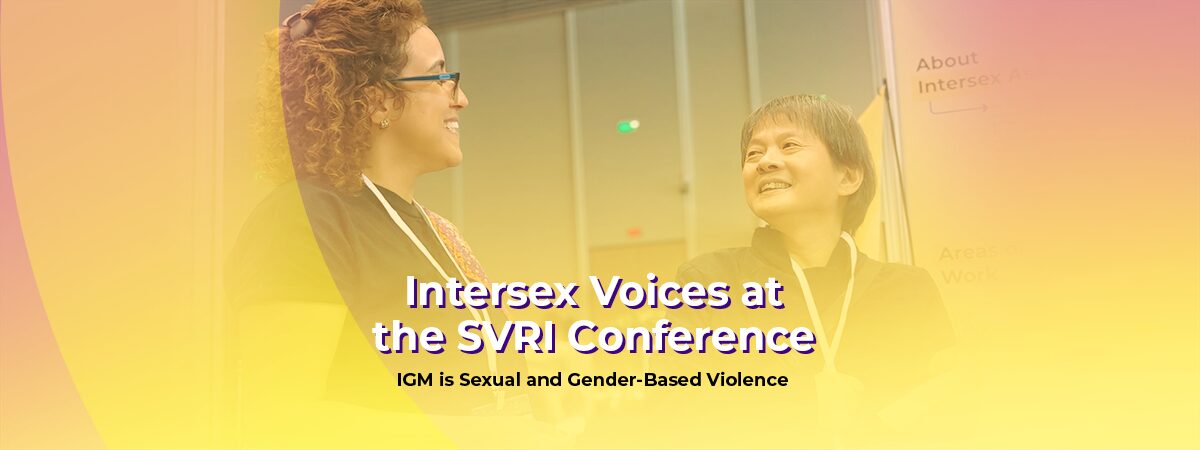

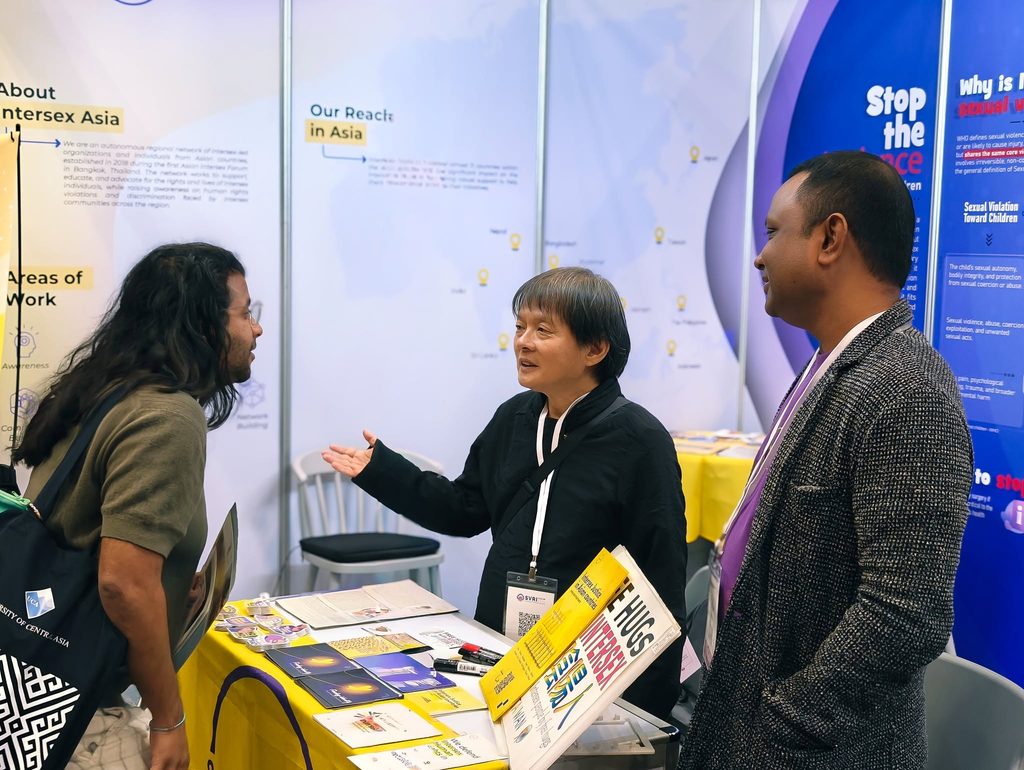
As our team members – Hiker Chiu (Executive Director), Selvan Antony (Programs Manager), and Andrey Tran (Communication Officer) – we reflect on our very first experience attending the SVRI (Sexual Violence Research Initiative) Conference held in Bangkok from 5 Oct to 9 Oct 2026. Setting up our booth allowed us to showcase the important work of Intersex Asia and shed light on intersex issues that often get overlooked in discussions about gender-based violence (GBV) and violence against children.
Despite the welcoming atmosphere, it became evident that intersex experiences remain largely invisible within many of these crucial conversations. Our interactions revealed a significant knowledge gap regarding intersex genital mutilation (IGM), with many attendees more familiar with female genital mutilation (FGM). This lack of awareness highlights the need for further integration of intersex human rights into research, policy, and practice to address the violence and harmful practices faced by the Asian intersex community.
At SVRI, our aim was clear: to advocate for intersex human rights as a vital component of discussions on sexual and gender-based violence (SGBV), violence against children, bodily autonomy for intersex people, and ethical care. Overall, our experience at the conference was positive, and we are excited to share key insights that emerged from our participation.
Connecting and Impacting at the Conference through our Booth
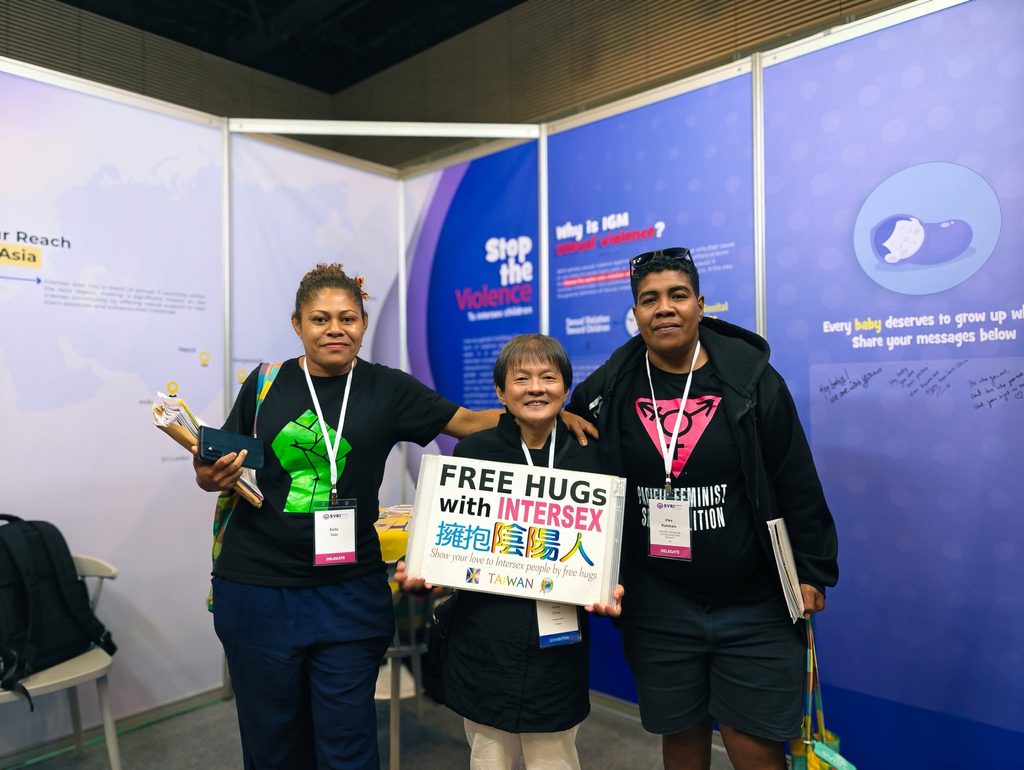
Having our booth positioned near the entrance was a strategic advantage. The engaging design and informative materials attracted many visitors, fostering conversations about intersex issues and intersex genital mutilation (IGM). However, we identified a critical gap: while SVRI is deeply rooted in research, our team draws from community and advocacy backgrounds. This presented challenges, as many attendees were primarily familiar with female genital mutilation (FGM) and less so with IGM.
To better cater to researchers and policymakers, we recognized the need to enhance our communication materials. Some of our educational resources were better suited for community audiences, lacking the hard data and scientific references necessary to build credibility among researchers.
Throughout the conference, we had meaningful one-on-one conversations with attendees at our booth. Our innovative use of sticker-based explanations effectively captured their curiosity and interest, leading to insightful discussions. To further evaluate the impact of our outreach efforts, we plan to introduce a handheld clicker system that will allow us to gather immediate feedback.
As we look to the future, we envision a more customized booth, featuring larger posters that convey vital information, intersex flags that proudly represent our community, and a looping video presentation that engages visitors consistently. We also intend to create a shared folder for uploading conference photos, ensuring we document our efforts and the connections we made. These thoughtful enhancements will not only boost the effectiveness of our presence but also amplify our impact at future events.
Why IGM is an SGBV Issue
This brings us to the question: why should IGM be classified as a form of SGBV? The answer lies in the nature of these interventions. When unnecessary and non-consensual medical procedures are performed on intersex children to conform their bodies to binary sex and gender expectations, these actions impose rigid gender norms through coercive bodily changes, typically before the child is able to provide informed consent. This understanding allows us to focus on the intention and repercussions of such interventions rather than labeling intersex bodies as inherently problematic.
The consequences of these interventions can be irreversible, leading to lasting physical and psychological harm. International human rights frameworks categorize non-consensual and unnecessary medical interventions on intersex individuals as harmful practices that infringe on bodily integrity, health, autonomy, and the fundamental right to be free from torture and degrading treatment. Thus, from this perspective, IGM aligns with the themes of SGBV because it employs coercive practices to enforce social norms and violates bodily autonomy. It’s essential, however, that we do not reduce intersex experiences to a one-dimensional narrative of suffering. While FGM can serve as a useful analogy to engage those unfamiliar with IGM, drawing parallels should serve to enhance understanding, not obscure the unique histories and experiences of intersex individuals.
Notable Sessions and Insights from Our Team
Our team members attended several sessions throughout the event. Notable sessions included:
- ‘Safe Data, Strong Evidence’: Focused on the significance of reliable data in effectively addressing GBV.
- ‘Women and Children in Conflict and Crisis Settings’: Addressed vulnerabilities and protective frameworks in crisis contexts.
- ‘Justice Beyond Borders’: Highlighted community-led responses to GBV in the absence of government support.
These discussions underscored the necessity of using data to inform our intersex advocacy efforts and the importance of inclusivity, particularly for marginalized communities including LGBTQI+ individuals in Asia.
As we move forward, our commitment is to foster sustainable change through empowered communities and ethical research practices. By prioritizing the voices of those directly affected by GBV, including individuals within the intersex community, we aim to create a comprehensive approach that not only addresses immediate needs but also promotes long-term resilience. Together, we can build a safer and more equitable society for all.
Looking Ahead: Together for a Safer Future
Our experience at the SVRI Conference was both enlightening and inspiring. We were reminded of the power of collaboration and the importance of elevating intersex voices in the broader conversation around gender-based violence and advocacy. The interactions we had at our booth and the sessions we attended reinforced our commitment to enhancing research and advocacy efforts that are inclusive and representative of all communities, particularly those that have been historically marginalized.
As we take these insights back to our work at Intersex Asia, we are excited about the potential for growth and change. By continuing to develop our communication strategies and engaging with researchers and policymakers, we will ensure that intersex human rights receive the attention they deserve. We invite our peers, allies, and community members to join us in this movement. Together, we can amplify our voices, share our stories, and foster a future where every individual, regardless of their identity, is recognized and respected.