
When the whole world questioned whether I had a right to exist, only one person stood between me and the storm: my mother!
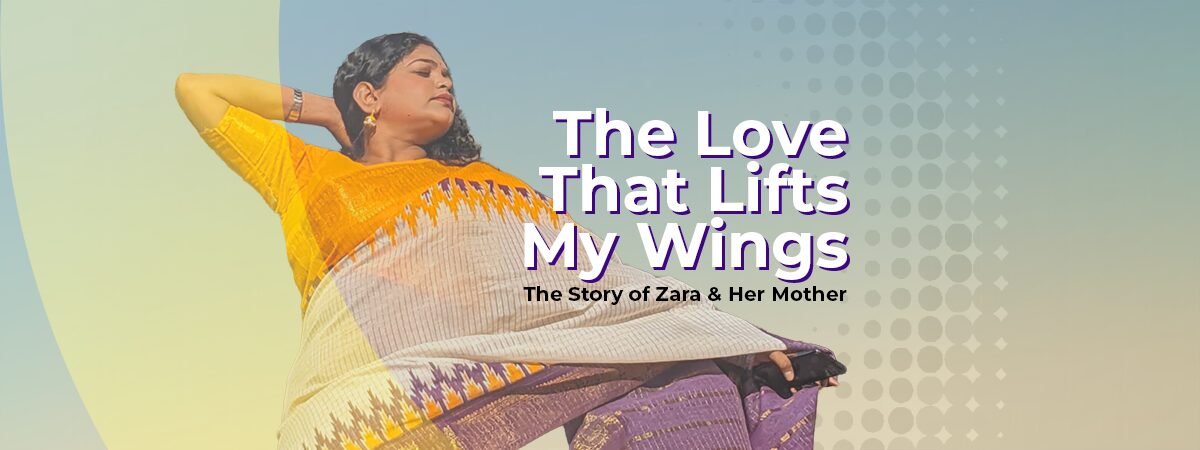
My name is Zara Afroz. I am 27 years old, an intersex activist, and the co-founder of Intersex Bangladesh. My story is about surviving childhood trauma, advocating for intersex human rights, and resisting discrimination in South Asia. But more than anything, it is a tribute to the unconditional love of a mother who refused to let the world break her child.
A Stormy Childhood & A Mother’s Shield
I was assigned male at birth and named Md. Parvez, but my physical development didn’t progress like other children. By the time I sat for my SSC board exams in 2015, I was still less than four feet tall. Because of that, I was constantly subjected to the curiosity, mockery, and bullying of my classmates. I had to endure immense mental stress, self-doubt, and isolation. Many times, it felt as though, in the eyes of others, I was nothing more than an object of ridicule.
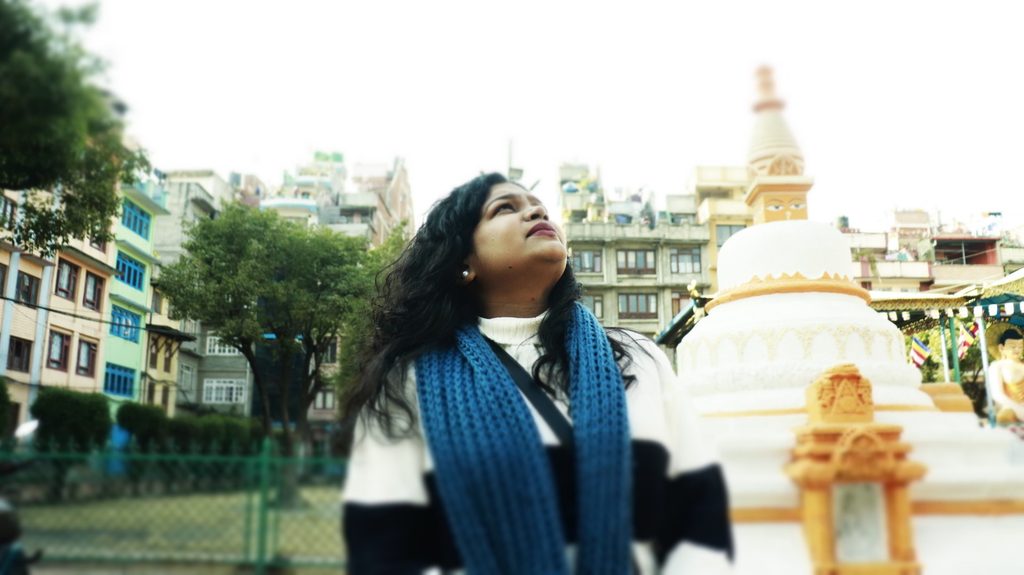
I remember crying and praying to Allah to just make me taller. During that painful period, I made a specific prayer about my body: “Allah, you have created me differently in so many ways; please at least increase my height a little.” I feel that the Creator did hear my prayer. I did grow—I am 5 feet 3 inches today, and no one bullies me about my height anymore.
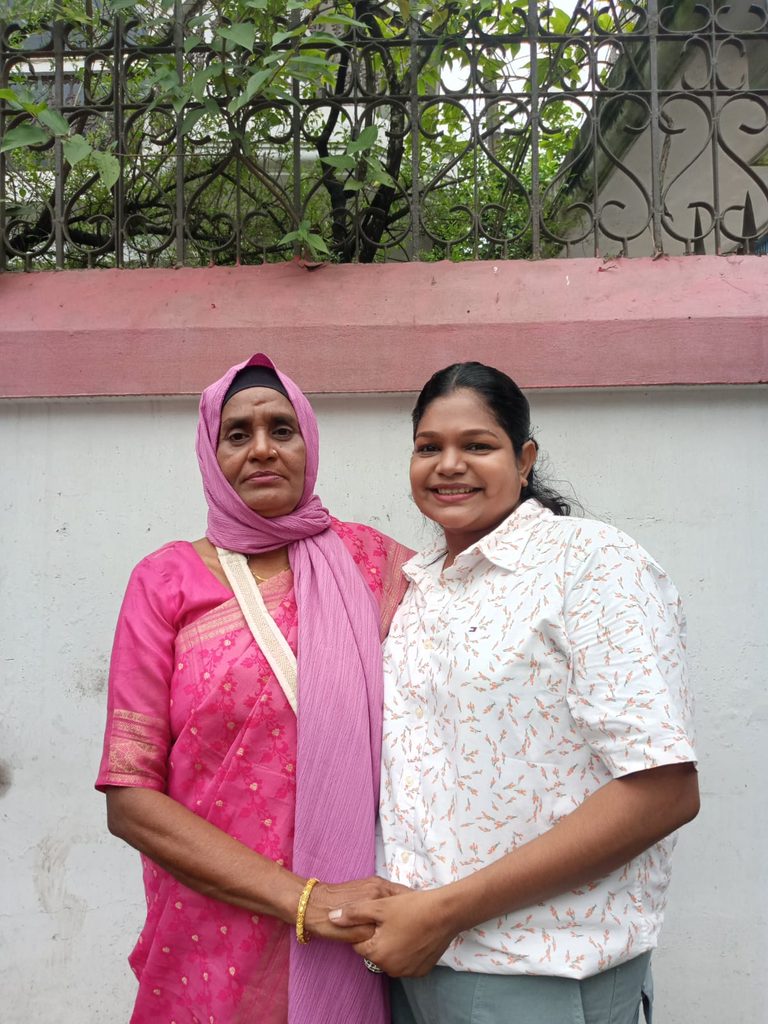
Yet, the emotional scars of that bullying remain etched in my memory. They help me understand how deeply a child can be psychologically traumatized because of bodily differences. Through all of it, my mother was my shield. She couldn’t stop the kids from laughing, but she was always there at the door when I came home, ready to hold me. She suffered in silence, enduring the cruel whispers of neighbors who wondered what was “wrong” with her child.
The Medical Journey and a Mother’s Sacrifice
When I reached puberty, the confusion turned into terror. While other boys matured into young men, my body began developing female characteristics. Innumerable questions arose, but there were no answers. I was too terrified to leave the house. People on the street would stare, point, and ask: “Are you a boy or a girl?” On one hand, my legal name was Md. Parvez, but on the other hand, my appearance and physical structure did not conform to that identity. My self-confidence was completely shattered.
My mother, however, refused to give up on me. Desperate to protect me from a judgmental society, she took me to doctor after doctor. We underwent endless blood tests, X-rays, and medical consultations. The medical practitioners suggested extreme, expensive, and risky procedures, including hormonal interventions carrying life-threatening risks. They labeled my body “abnormal”- making me feel like something broken that desperately needed to be “fixed.” My mother didn’t care about the cost. She was prepared to sell her last remaining piece of land just to pay for those treatments. She was willing to give up everything she owned, not to “correct” me, but to try to buy me safety and a normal life. When she realized how dangerous and invasive those treatments were, she stopped. She looked at me said:“Let my child stay just the way they are. I don’t need them to change. I just want my precious child to remain alive in my arms.”
It wasn’t easy for her. She realized my body couldn’t be changed, and she spent years carrying a silent, heavy anxiety. I would often catch her crying in secret, wondering who would protect me when she would no longer be here. But seeing myself through her eyes changed everything for me. If she could love me exactly as I was, then maybe I wasn’t a mistake. Her love was the first place I found safety. It taught me that my body wasn’t a problem to be fixed. It made me strong enough to survive.
The Struggle of Intersex Families in Bangladesh
In Bangladesh, countless families face the same painful dilemmas my mother confronted. Without access to accurate, depathologized information about intersex variations, parents are vulnerable to incorrect medical advice. Tragically, many parents are pressured by doctors into consenting to irreversible, non-consensual surgeries on their infants in attempts to “fix” them, often resulting in lifelong physical pain, psychological trauma, or even mortality. As documented by international bodies like the United Nations OHCHR, these harmful practices are grave violations of a child’s right to bodily autonomy and integrity.
This struggle is further complicated by legal and cultural misconceptions. In Bangladesh, official government gazettes have historically conflated “intersex” traits under the socio-cultural umbrella of the “Hijra” identity. Because of that, societal prejudices and marginalization tied to Hijra communities are projected onto intersex persons, even though being intersex is a natural biological variation in sex characteristics, rather than a gender identity or cultural community. Out of fear, parents tend to isolate their children, denying them education, healthcare, and a future. They do it to protect them, just like my mother tried to do, but it ends up trapping them in loneliness.
Reclaiming My Identity & Finding Chosen Family
In 2017, I attended an awareness workshop where I heard the term “Intersex” for the very first time. For the first time in my life, I had an affirming, accurate name for my reality. On February 27, 2020, I sat in a room with nine other intersex peers. We shared our journeys, shed tears of relief, and experienced an awakening: I am not a curse. My existence is completely natural.
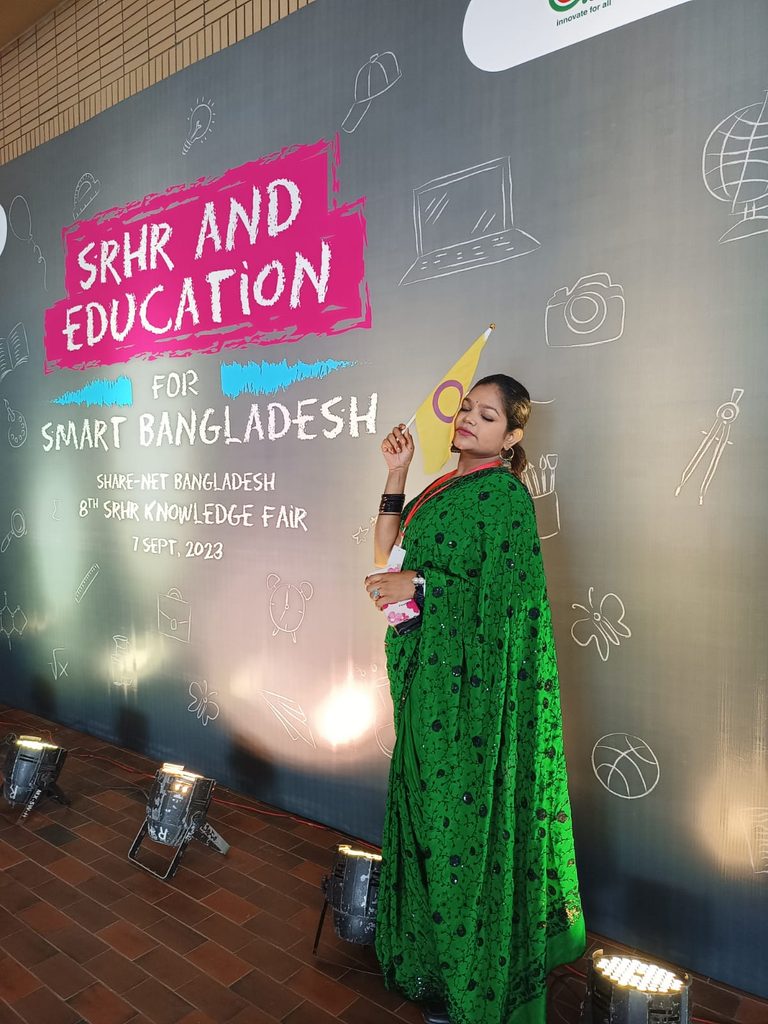
Acceptance was not universal. Certain relatives distanced themselves and even attempted to block my younger sister’s marriage because of my visibility. Yet my mother stood beside me. Alongside her, I found my chosen family, fellow advocates and allies, including Tanveer, Shoaib Bhai, Royal Bhai, and Riya. They embraced me, listened to my voice, and gave me the strength to speak publicly. For years, I tormented myself with the question: “What is my fault?” Today, I no longer ask that. Through my mother’s courage and the solidarity of the intersex movement, I declare with pride: My body is valid. My life is valid.
Today, as co-founder of Intersex Bangladesh, working alongside grassroots communities and regional human rights networks like Intersex Asia, I witness the same fears echoing in families across Asia. But when I look into the eyes of young intersex persons today, I do not just see my own youth; I see their mothers. I do my work now to ensure that no mother in Bangladesh or across Asia has to weep in secret, terrified for her child’s future. Every intersex child deserves to grow up cherished, protected, and honored in their mother’s arms, celebrating exactly who they are.