
From 30 September to 2 October 2026, clinicians, researchers and community members from across the region gathered in Bangkok for the first conference of the Asia Professional Association for Transgender Health (AsiaPATH). As part of Intersex Asia’s engagement leading up to the Intersex Awareness Month, this conference brought new opportunities to meet with potential stakeholders and introduce our agenda, particularly the Taipei Consensus Statement, which will soon be published.
Introducing the Taipei Consensus Statement
Since this is the first iteration of the AsiaPATH conference with many researchers and medical experts joining for the first time, we believe it was fitting to introduce our Taipei Consensus Statement. The statement emerged from the first Asian Summit on Intersex Healthcare, held in Taipei in November 2025. It brought together medical professionals and intersex human rights advocates, including people with lived experience, from nine countries across the region.
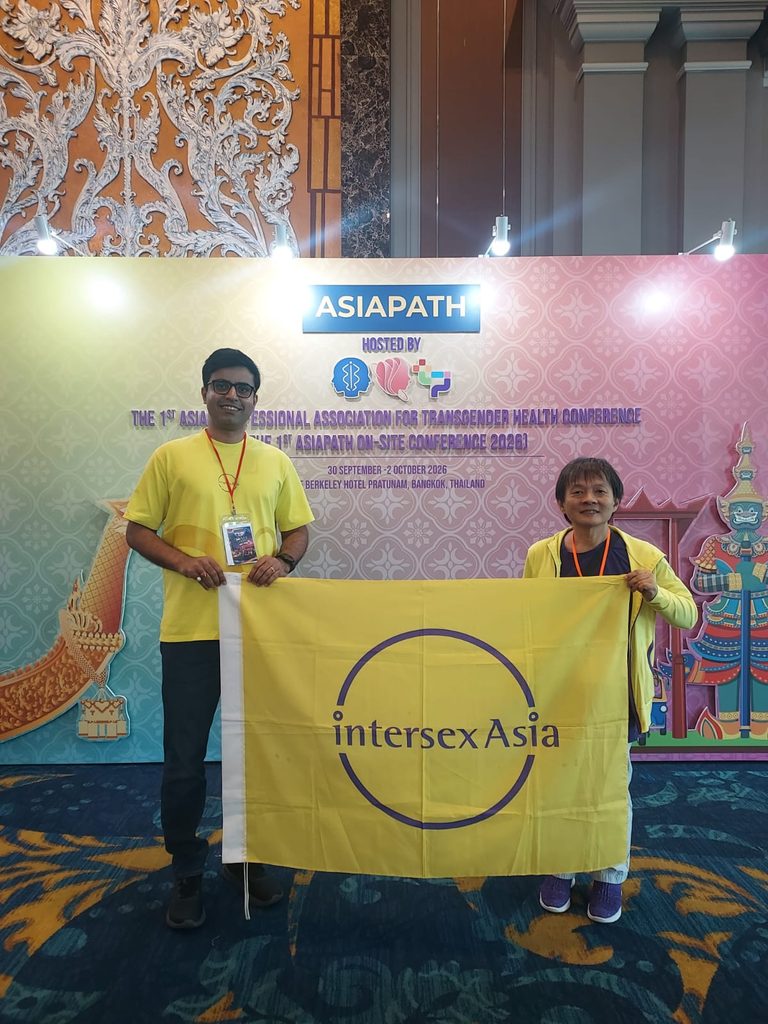
The presentation covered key background leading to the statement, including UN Resolution 55/14, a WHO-supported review of infant surgeries, and the Brussels Collaboration‘s framework on medical necessity. We outlined the statement’s core pillars: bodily integrity and autonomy; affirming healthcare; making deferral the default for non-urgent decisions; and valuing lived experience as evidence.
Bringing the Taipei Consensus Statement to this medical-focused conference is a vital step in putting our advocacy into practice. Because this statement represents the collective voice of both community members and medical professionals united to address specific shortcomings in the medical system, introducing it directly in front of doctors and researchers is the most direct and effective way to drive systemic change. Emerging from the first Asian Summit on Intersex Healthcare held in Taipei in November 2025, the statement bridges the lived experiences of intersex human rights advocates from nine countries across the region with the clinical expertise of medical professionals.
We were especially delighted to be joined by participants of the Asian Summit on Intersex Healthcare. Their presence was a reminder that the statement is a shared commitment between clinicians and communities, and that this collaboration continues beyond Taipei.
New Connections
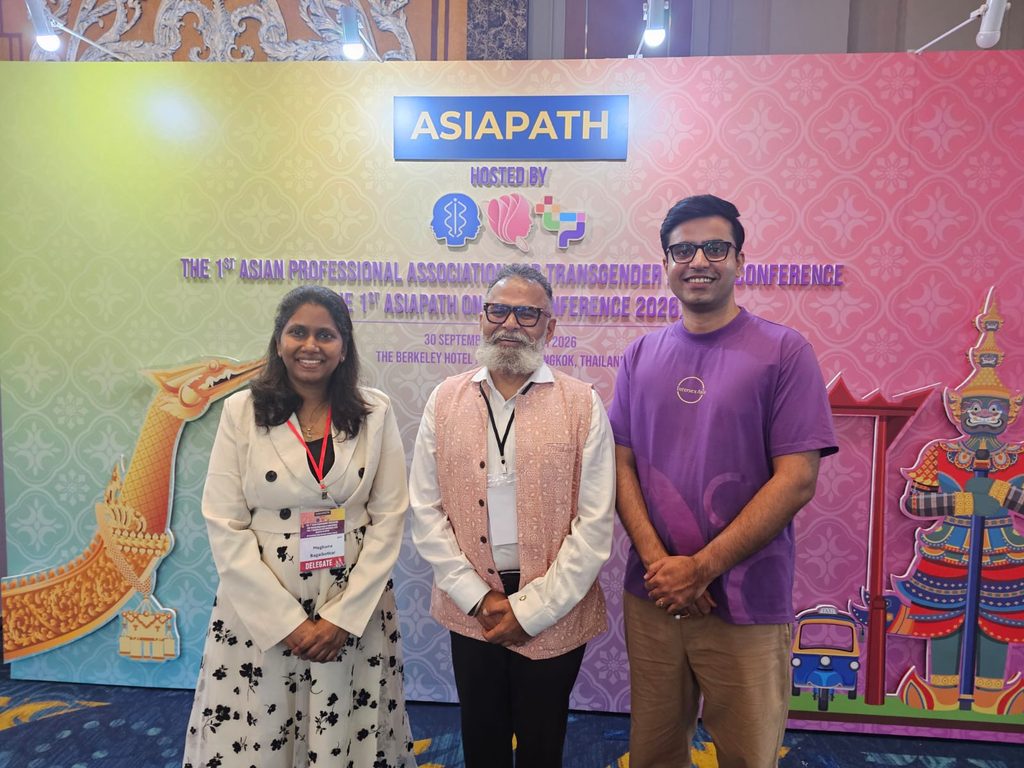
Attending the conference provided a valuable platform to learn and build vital new connections across sexual and reproductive health and rights (SRHR) and gender-affirming healthcare spaces. Exploring these intersections highlighted fundamental similarities between the intersex and transgender movements. Both communities share core values rooted in bodily autonomy, informed consent, and depathologisation, while navigating parallel challenges against rigid medical frameworks and non-consensual protocols. At the same time, it remains essential to recognise their distinct natures: while transgender healthcare primarily focuses on gender affirmation, intersex healthcare addresses congenital variations in sex characteristics.
These key insights and alliances open exciting new leads and strategic opportunities to expand Intersex Asia’s reach across the region. Engaging with broader healthcare coalitions establishes a fertile context where the principles of the Taipei Consensus Statement can be effectively contextualised, adapted, and implemented. By embedding the statement’s core standard of medical necessity into emerging regional standards of care, pairing systematic evidence with lived experiences, and promoting trauma-informed clinical practices, we can foster safer, rights-affirming medical environments for intersex people throughout Asia.
AsiaPATH provides a key opportunity to ensure intersex perspectives shape region-specific standards of care using the Taipei Consensus Statement’s principle of medical necessity. Combining systematic evidence with lived experiences strengthens our advocacy, while embedding trauma-informed practices helps providers create safer clinical environments for intersex individuals who have experienced non-consensual interventions.
Looking ahead
Our participation at AsiaPATH reaffirmed how valuable it is for intersex voices to be present where healthcare practice and policy are shaped. We are keen to continue enhancing our visibility in such spaces, deepening our engagement with medical professionals and working together towards care that respects the dignity and autonomy of intersex people.
We thank the organisers of AsiaPATH for accepting our submission, and everyone who attended our session and shared their reflections. We warmly invite clinicians, researchers and advocates to stay in touch with Intersex Asia and to follow our work on our website and social media.