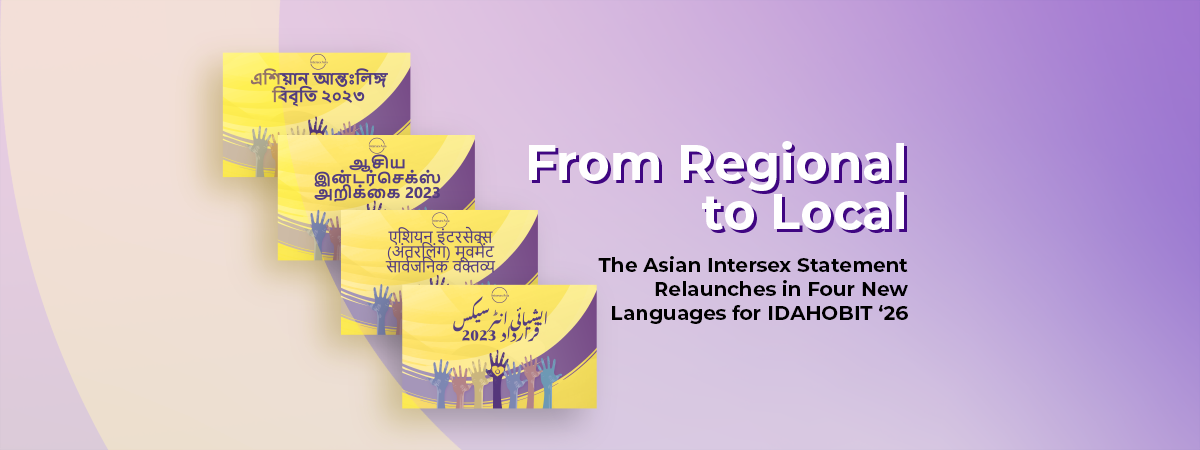

As we celebrate the International Day Against Homophobia, Biphobia, Interphobia, and Transphobia (IDAHOBIT), Intersex Asia is proud to announce the soft re-launch of the Asian Intersex Statement. Originally released in 2023, this pivotal document is now being released in four new languages: Tamil, Bangla, Hindi, and Urdu. The question is, why this document? Why now, and why these languages?
A Collective Voice for the Asian Intersex Community
Why this document? Why not other report or materials?
The Asian Intersex Statement is not merely a document; it is the collective voice of the Asian intersex community, articulated and shaped during the 3rd Asian Intersex Forum held in Bangkok in October 2022. 22 dedicated intersex activists has joined their voices, representing intersex organizations and grassroots communities from nine countries across Asia: India, Indonesia, Nepal, Pakistan, the Philippines, Taiwan, Thailand, Mongolia, and Japan. These leaders collaborated to ensure that the realities of intersex individuals in Asia are recognized and addressed on the regional and global stage.
A Roadmap for Intersex Advocacy in Current Situation
Why the translation is released now?
While other reports and documents highlights the pervasive challenges faced by intersex individuals, including widespread discrimination, lack of legal protection, harmful medical interventions that violate bodily integrity, the current reality goes much more complex than that. Intersex organization and movement are now facing bigger systemic challenges across the region, such as the lack of funding and unclear political landscape. These require not only effort from one organization but the collaboration across movements.
It’s exactly why this Statement is now more important than ever. It chalked out a comprehensive roadmap for intersex advocacy, with clear, actionable demands for governments, human rights institutions, and civil society, including:
- Protecting Bodily Autonomy: Calling for an immediate end to unnecessary, non-consensual medical interventions, empowering intersex people to make their own decisions regarding their physical autonomy and self-determination.
- Ensuring Legal Recognition: Demanding that intersex traits be recognized as natural variations of sex characteristics, not disorders, and urging the inclusion of “sex characteristics” in anti-discrimination legislation.
- Fostering Inclusion: Advocating for inclusive guidelines in healthcare, education, and official statistics to ensure intersex individuals have equal access to citizenship rights, social protection, and affirmative care.
A Beacon for Local Intersex Movements
Why these languages ?
The struggle for intersex human rights in Asia is deeply rooted in local contexts to drive meaningful policy changes. The new translations of the Asian Intersex Statement into Tamil, Bangla, Hindi, and Urdu are Intersex Asia’s effort to further spread this critical message to more countries and diverse communities in languages they are familiar with.
By making these demands accessible to local activists, allies, and policymakers, we hope the statement will act as a beacon that inspires and strengthens local intersex movements at the grassroots level. Empowering communities with knowledge and a shared regional framework is essential for combating stigma and advocating for long-lasting legal recognition.
As we celebrate IDAHOBIT, we invite allies, policymakers, and human rights defenders to read, share, and support the Asian Intersex Statement. Together, we can build a region where the human rights, bodily autonomy, and dignity of all intersex people are respected and protected.
Read and download the Asian Intersex Statement in your language:
English Tamil Bangla Hindi Urdu