
📌 Executive Summary (Key Takeaways)
- Historic Representation: From September 14–18, a global delegation of intersex advocates convened at the Palais des Nations during the UN Human Rights Council session for the inaugural “Intersex Superweek.”
- Sanitation & Dignity: Intersex Philippines Executive Director and Intersex Asia Board Co-Chair Jeff Cagandahan delivered a joint oral statement on behalf of ILGA World and GATE, emphasizing that public sanitation facilities remain unsafe due to severe risks of harassment and forced outing.
- Healthcare & Lifesaving Access: Activists spotlighted Congenital Adrenal Hyperplasia (CAH), calling on the World Health Organization and member states to secure hydrocortisone on essential medicine lists and ban non-consensual medical interventions, echoing Intersex Asia’s Regional Demands.
- Regional Diplomacy: Bilateral dialogues with diplomats from Thailand, Indonesia, and the United Kingdom connected grassroots evidence from Intersex Asia’s Research to multilateral policy commitments.
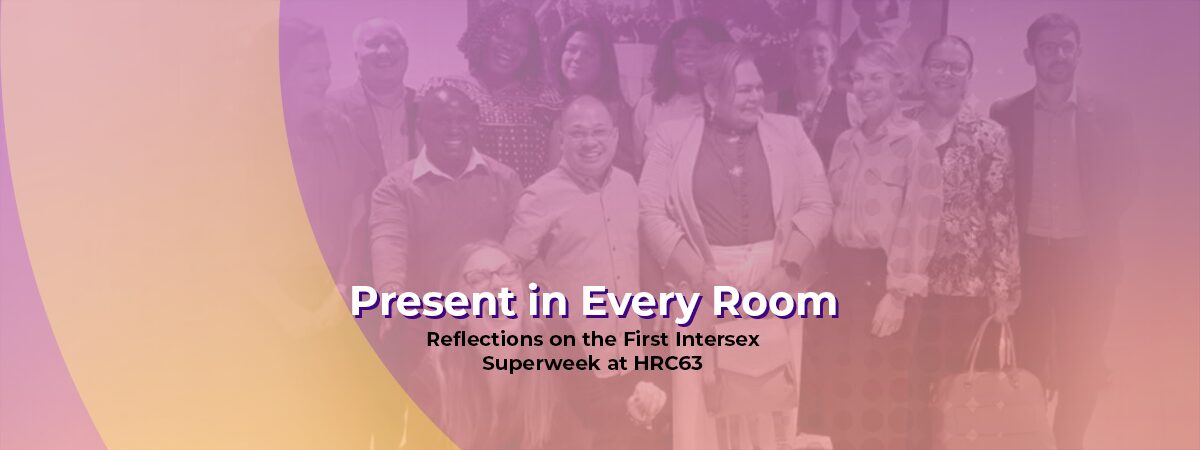
For five decisive days in September (14–18th), the historic corridors of the Palais des Nations in Geneva carried voices that the United Nations Human Rights Council has rarely heard together. During the Council’s regular session, a cross-regional coalition of intersex civil society organizations, organized with the support of ILGA World, convened an international delegation of grassroots activists for the first Intersex Superweek – an intensive, coordinated week of multilateral advocacy on intersex human rights. The delegation united frontline advocates from every continent: Jeff Cagandahan (Executive Director of Intersex Philippines and Co-Chair of the Intersex Asia Board), Natasha Jiménez (Mulabi, Costa Rica), Dan Christian Ghattas (OII Europe), Kimberly Zieselman, Frankie Kibagendi, Crystal Hendricks, Irene Kuzemko, and Baby John Musamba.
The week’s guiding principle was both urgent and deeply personal: intersex people exist everywhere – as siblings, coworkers, neighbours, and community leaders. By walking the halls of international diplomacy, the activists sought to bridge the divide between diplomatic treaties and the lived realities of people born with variations in sex characteristics. Their interventions directly advanced the milestone OHCHR study on the human rights of intersex persons and built upon foundational resources like Intersex Asia’s UN Factsheet to champion universal protections for bodily autonomy and self-determination.
Speaking on Water, Sanitation, and Everyday Dignity
The advocacy week commenced on Monday, 14 September, when Jeff Cagandahan delivered an oral intervention on behalf of ILGA World and GATE during the Interactive Dialogue with the UN Special Rapporteur on the human rights to safe drinking water and sanitation. The statement welcomed the Special Rapporteur’s explicit recognition of the systemic barriers confronting trans, intersex, and gender-diverse individuals. Crucially, the intervention commended the mandate’s progressive stance on menstrual health and hygiene, which explicitly acknowledges that intersex persons may menstruate. Bringing grassroots reality directly to the Council floor, Cagandahan emphasized the acute daily risks intersex persons face in sex-segregated and inadequate public facilities:
“A sanitation facility may technically be available while remaining effectively inaccessible because using it creates risks of harassment, violence, humiliation, forced outing, or arrest.”
Closing the statement, Cagandahan urged Member States to guarantee that sanitation is free, safe, accessible, and dignified for all people regardless of sexual orientation, gender identity, gender expression, or innate sex characteristics (SOGIESC). It was a pivotal moment, embedding intersex health and dignity firmly into standard human rights benchmarks.
Lived Experience, CAH, and the Right to Healthcare
On Tuesday, Cagandahan spoke at a specialized diplomatic side event on intersex healthcare and equitable access to medicines, grounding policy recommendations in firsthand lived experience. He challenged the prevailing medical paradigm that treats natural intersex variations as pathologies to be surgically “corrected,” while leaving individuals without competent, affirming care once they leave paediatric settings. Central to his testimony was the urgent struggle of intersex people living with Congenital Adrenal Hyperplasia (CAH), an endocrine variation requiring consistent daily hydrocortisone to prevent life-threatening adrenal crises. Supply disruptions, prohibitive out-of-pocket costs, and rigid prescription rules make this basic, inexpensive medicine an ongoing struggle to secure.
“Healthcare cannot be considered accessible when the basic medicines required to sustain human life are treated as non-essential, expensive, or administratively burdensome.” He shared.
He urged governments to harmonize healthcare reforms with legal protections in line with Intersex Asia’s Regional Demands, including a simple, administrative process based entirely on self-determination, alongside bans on non-consensual medical practices on intersex children, the inclusion of hydrocortisone on national essential medicine lists, and intersex-informed medical education.
Multilateral Engagement
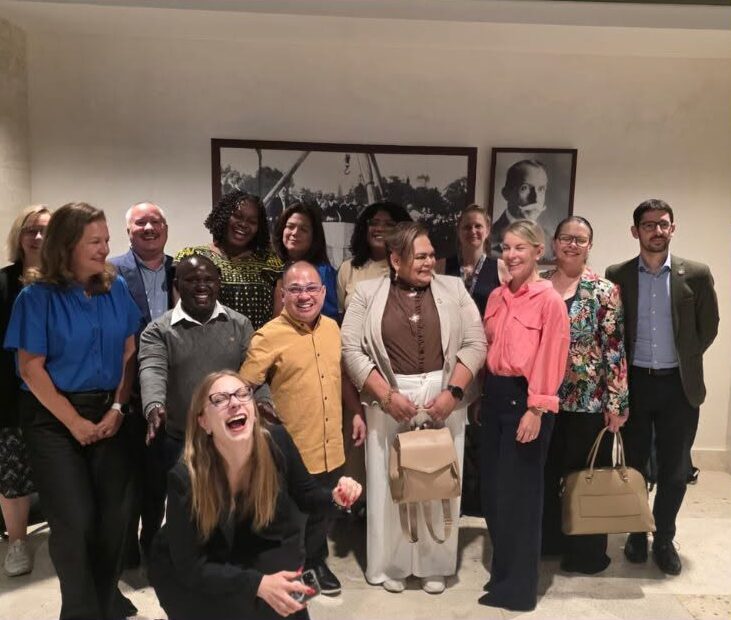
The statement didn’t stop at the conference; it was reinforced throughout the week through bilateral and multilateral engagement with international institutions and state missions:
- World Health Organization (WHO): On Tuesday afternoon, the delegation met with WHO representatives to follow up on the health discussion earlier.
- OHCHR & The Core Group of States: On Wednesday, activists held high-level discussions with the Office of the United Nations High Commissioner for Human Rights (OHCHR) and the intergovernmental Core Group of States.
- UN Women: On Thursday morning, activists engaged UN Women on addressing issues with intersex women and girls.
- Bilateral State Meetings: Strategic closed-door bilateral meetings were held with state delegations from Thailand, Indonesia, and the United Kingdom.
- The activists also built cross-movement solidarity by participating in the “Promising Practices to Protect the Rights of LGBTIQ+ People Deprived of Liberty,” event, reminder that intersex people in detention face particular risks.
For Intersex Asia, the bilateral dialogues with Thailand and Indonesia were especially critical. They allowed Asian delegates to present documented grassroots evidence such as the Intersex Asia’s Research Reports directly to the regional conversation.
Looking Ahead: From Geneva to Grassroots Realities
The first Intersex Superweek showed what becomes possible when intersex activists from different regions share one space and one purpose. Each statement, meeting and conversation added to a growing familiarity between intersex communities and those who shape international policy.
For Intersex Asia, Jeff’s presence throughout the week helped ensure that the experiences of intersex people in Asia were part of that conversation. As part of its broader Advocacy Initiatives, the organization is translating this multilateral momentum back into domestic legal protections across Asian states – fighting for bodily integrity, accessible healthcare, and full human rights for all.
Frequently Asked Questions
How does Intersex Asia participate in United Nations advocacy?
Intersex Asia participates in UN Human Rights Council sessions, delivers oral statements during Interactive Dialogues, holds bilateral consultations with Asian member states, and provides educational resources like the UN Factsheet and regional research reports.
What are Intersex Asia’s core policy demands regarding healthcare?
As outlined in Intersex Asia’s Regional Demands, the organization advocates for an end to non-consensual medical interventions on intersex minors, depathologized medical training, and guaranteed access to essential life-saving therapies such as hydrocortisone for people with Congenital Adrenal Hyperplasia (CAH).
Where can I learn more about affirming terminology for intersex advocacy?
You can consult Intersex Asia’s Intersex 101 guide and the Intersex Glossary: The Purple Key for depathologized, human-rights-based language.